


Hey there! As a digital kiosk supplier, I've been thinking a lot about the potential of digital kiosks in healthcare services. In this blog post, I'll share my thoughts on whether a digital kiosk can be used for healthcare services, and why I believe it's a game-changer.
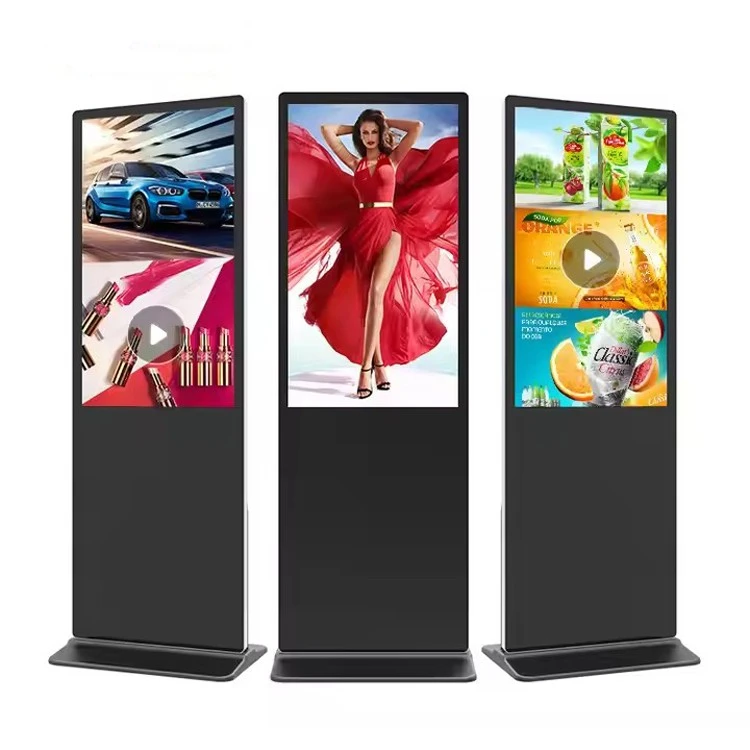
Let's start by understanding what a digital kiosk is. A digital kiosk is essentially a self-service terminal that can display information, collect data, and interact with users. They come in various forms, like the Floor Standing Digital Kiosk which is great for high-traffic areas, and the 55 Inch Digital Kiosk Display, offering a large and clear viewing experience.
Now, onto the big question: Can a digital kiosk be used for healthcare services? The answer is a resounding yes! Here are some of the ways digital kiosks can revolutionize healthcare.
Patient Check - In and Registration
One of the most time - consuming processes in a healthcare setting is patient check - in and registration. Traditionally, patients have to fill out paper forms, wait in long queues, and then hand over the forms to the front - desk staff. This process is not only slow but also prone to errors.
With a digital kiosk, patients can check themselves in quickly and easily. They can enter their personal information, insurance details, and medical history directly into the kiosk. The kiosk can then verify the information in real - time, reducing the chances of errors. This not only speeds up the check - in process but also frees up the front - desk staff to focus on more critical tasks.
Health Education
Digital kiosks can be a great tool for health education. They can display educational videos, brochures, and articles on various health topics. For example, in a doctor's office, a kiosk can provide information about common diseases, preventive measures, and healthy lifestyle tips.
Patients can access this information at their own pace, even while waiting for their appointments. This empowers patients to take a more active role in their health and make informed decisions.
Symptom Assessment
Some digital kiosks can be equipped with symptom assessment tools. Patients can describe their symptoms on the kiosk, and the kiosk can use algorithms to provide a preliminary assessment. This can help triage patients more effectively. For instance, if a patient has severe chest pain, the kiosk can quickly identify the potential seriousness of the condition and alert the medical staff immediately.
This early assessment can save valuable time, especially in emergency situations, and ensure that patients receive the appropriate level of care.
Appointment Scheduling
Scheduling appointments can be a hassle for both patients and healthcare providers. Digital kiosks can simplify this process. Patients can check the availability of doctors, choose a convenient time slot, and schedule their appointments right on the kiosk.
This reduces the need for phone calls and back - and - forth communication between the patient and the receptionist. It also allows patients to make appointments outside of regular office hours, which is especially useful for those with busy schedules.
Medication Reminders
Digital kiosks can be used to set up medication reminders for patients. When a patient checks in or registers, they can enter their medication schedule into the kiosk. The kiosk can then send reminders via text message or email at the appropriate times.
This helps patients stay on top of their medication regimen, which is crucial for managing chronic conditions and ensuring a successful recovery.
Feedback Collection
Healthcare providers always want to improve the quality of their services. Digital kiosks can be used to collect feedback from patients. Patients can rate their experience, provide comments, and suggest areas for improvement.
This feedback is invaluable for healthcare providers as it helps them identify what they are doing well and where they need to make changes. It also shows patients that their opinions are valued, which can improve patient satisfaction.
Challenges and Solutions
Of course, implementing digital kiosks in healthcare is not without its challenges.
One of the main challenges is data security. Since digital kiosks handle sensitive patient information, it's crucial to ensure that the data is protected. Healthcare providers need to work with digital kiosk suppliers to implement robust security measures, such as encryption, access controls, and regular security audits.
Another challenge is user adoption. Some patients, especially the elderly or those with limited technology skills, may be hesitant to use digital kiosks. To address this, healthcare providers can offer on - site assistance, provide clear instructions, and offer training if necessary.

In conclusion, the potential of digital kiosks in healthcare services is immense. They can improve the efficiency of healthcare operations, enhance patient experience, and empower patients to take control of their health. As a digital kiosk supplier, I'm excited about the role our products can play in transforming the healthcare industry.
If you're a healthcare provider looking to streamline your operations, improve patient satisfaction, and enhance the overall quality of care, I encourage you to consider incorporating digital kiosks into your practice. Whether you need a Floor Standing Digital Kiosk for a large waiting area or a 55 Inch Digital Kiosk Display for a more prominent display, we have the solutions for you.
Contact us today to start a conversation about how our digital kiosks can meet your specific healthcare needs. Let's work together to make healthcare more accessible, efficient, and patient - centered.
References
- Health Information and Management Systems Society (HIMSS). Best practices for patient self - service kiosks in healthcare.
- American Hospital Association. The future of patient engagement in healthcare.
- Journal of Medical Internet Research. Digital health tools for patient education and engagement.