


LCD Panel
Your Professional LCD Panel Supplier!
LCD Panel solutions are the foundation of reliable visual performance in industrial and commercial systems. As experienced China LCD Panel manufacturers, Hengstar supplies stable, high-quality panels designed for long-term operation and consistent display output. Founded in 2004, Hengstar combines in-house R&D, manufacturing, and sales to support global buyers with flexible sourcing, including custom and OEM options. Our LCD Panel range is widely used in industrial automation, Digital Signage, and embedded applications, meeting the expectations of professional procurement teams seeking dependable LCD Panel suppliers with proven production capability.

Why Choose Us
Professional Team
The company has a professional R&D team composed of top talents in the industry, with strong technical innovation capabilities and rich project experience.
Quality Control
The company provides leading display technology, mature automation control solutions, and perfect supply chain management services to ensure the stability and reliability of product quality.
Patents and Certifications
The company has 15 independent intellectual property use patents and 5 invention patents, and has CCC, CQC, CE, SGS certifications in the electrical industry, industry production licenses, and ISO9000 system certifications.
Advanced Equipment
The company is equipped with five digital signal generators, three automated production lines, a 500-square-meter Class 100 automatic bonding workshop, a 100-square-meter aging workshop, 30 automated assembly motors and other advanced equipment.
Types Of LCD Panel
TN (Twisted Nematic) panels
General attributes include a relatively low manufacturing cost and a relatively high level of responsiveness; the pixels change their state quickly which helps make moving images appear smoother. Some Twisted Nematic displays have double the usual refresh rate (120Hz instead of 60Hz) allowing them to take advantage of ‘active 3D shutter’ technologies and allowing them to display twice as much information every second for a smoother gaming experience.
VA (Vertical Alignment) panels
A definite strength of the VA panel is its efficiency at blocking light from the backlight when it’s not wanted. This gives deeper blacks and higher contrast ratios of around 2000:1 – 5000:1 with ‘Dynamic Contrast’ modes disabled – several times higher than that of the other LCD technologies. This can have a positive effect by giving a more atmospheric look to dark scenes in games and movies, whilst adding definition and depth to shadows and other fine details in the image.
IPS (In-Plane Switching), PLS (Plane to Line Switching) and AHVA (Advanced Hyper-Viewing Angle) panels
In-Plane Switching (IPS) and Fringe Field Switching (FFS) are technologies that apply the electric stimulus between electrodes on only one substrate unlike all other technologies described here where the electric stimulus is applied between electrodes on both substrates.
The advantage of these technologies is a much wider and more symmetrical viewing angle along with the elimination of the contrast inversion (or color shift) seen in TN TFT LCDs when viewed from various angles. IPS and FFS displays also are less sensitive to pressure, which is a big advantage in touchscreen displays.
LCD Panel Specification
|
Panel Size (diagonal) |
15.6" |
|
Native resolution |
1920 x 1080 |
|
Brightness(cd/m²) |
400 |
|
Contrast ratio (typ.) |
700:1 |
|
Max Color |
16.7 M, 8-bit |
|
Contrast angle(L/R/U/D) |
80/80/70/70 |
|
Responsive time(ms) |
16 |
|
Dot pitch (mm) |
0.17925 |
|
Display area (mm) |
344.16H x 193.59V |
|
Surface treatment |
Anti- glare. Hard-coating |
|
Surface hardness |
3H |
|
Backlight type |
LED |
|
MTBF(hrs) |
50,000 |
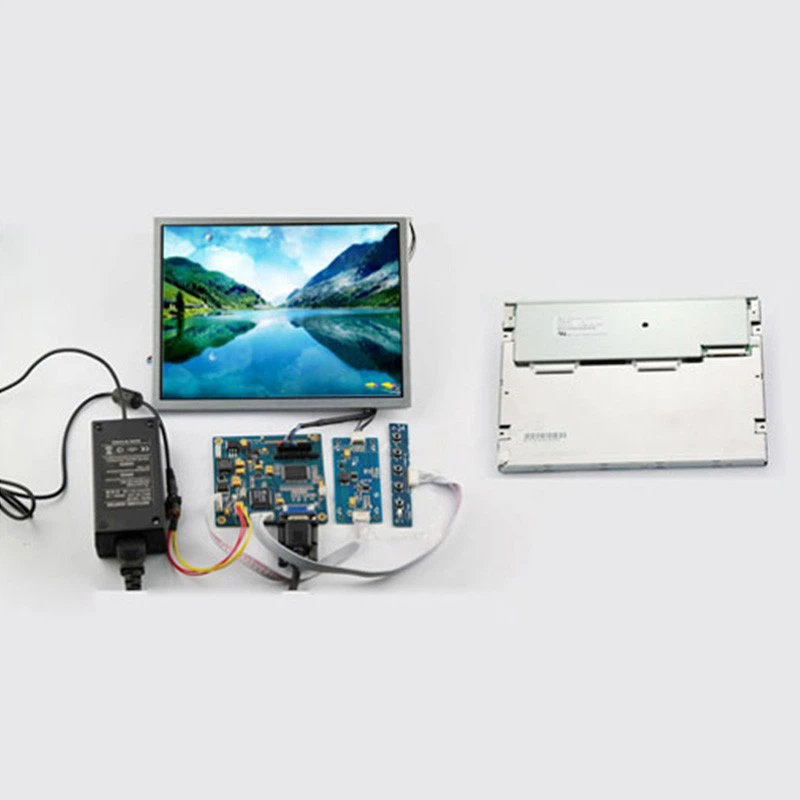
Principal LCD Panel Advantages
Sharpness
Image is perfectly sharp at the native resolution of the panel. LCDs panel using an analog input require careful adjustment of pixel tracking/phase.
Geometric Distortion
Zero geometric distortion at the native resolution of the panel. Minor distortion for other resolutions because the images must be rescaled.
Brightness
High peak intensity produces very bright images. Best for brightly lit environments.
Screen Shape
Screens are perfectly flat.
Physical
Thin, with a small footprint. Consume little electricity and produce little heat.
LCD Panel Environment
|
Environment |
|
|
Operating temp. |
0 to 55°C degree |
|
Strorage temp |
-20 to 60°C degree |
|
Operating humidity |
20~90%, non-condensing |
|
Storage humidity |
5 ~90%, non-condensing |
|
Operating alttiude |
16,000 ft |
|
Non-operating attude |
40,000 ft |
|
Shock |
10G acceleration (11ms duration) |
|
Vibration |
10~300Hz .5G RMS randon vibration |
General Lifespan of LED Panel’s Lifespan
The number is around 50,000 to 100,000 hours or about ten years. LCD spanels have a lifespan of between 30,000 and 60,000 hours, and Cathode Ray Tube (CRT) panels only give 30,000 to 50,000 hours. LED panels are also more energy efficient and offer better video quality.
There are different types of LED panels, and each will slightly differ in lifespan. It is usually because of its location and how it is used.
Outdoor panels generally have shorter lifespans thanks to the need for bright lighting, which deteriorates the diodes faster. Indoor panels use less brightness and are protected from the elements, making them last longer. On the other hand, commercial LED panels are almost always on, meaning they will break down faster, reducing their lifespan.
Application Of LCD Panel
Industrial Control Equipment
The LCD module is highly suitable for industrial control equipment due to its high resolution, fast response times, and robust performance. Industrial control panels often require displays that can withstand harsh environments, provide clear and detailed visuals for data monitoring, and offer touch-panel capabilities for intuitive user interaction.
Medical Instruments
LCD panel displays are integral components in medical instruments such as patient monitors, ultrasound machines, and diagnostic equipment. These displays need to deliver accurate and real-time imaging, vital signs monitoring, and diagnostic information with precision and reliability.
POS System
Point-of-sale (POS) systems rely on LCD panel display for transaction processing, inventory management, and customer interaction. LCD displays in POS terminals provide clear pricing information, promotional content, and payment options for seamless customer transactions.
Electronic Consumer Products
LCD panel displays are ubiquitous in electronic consumer products such as smartphones, tablets, laptops, and digital cameras. These devices require high-quality displays that offer vibrant colors, sharp images, and energy-efficient performance. interactions.
Vehicles
LCD panel displays are integrated into vehicles for navigation systems, infotainment consoles, instrument clusters, and rear-seat entertainment. Automotive displays need to withstand temperature variations, vibrations, and sunlight exposure while delivering clear visibility and interactive features for drivers and passengers.
Gaming Consoles
LCD panel displays are essential components in gaming consoles, handheld devices, and gaming monitors. Gamers rely on high-resolution displays with fast refresh rates, low input lag, and vibrant colors for immersive gameplay and competitive edge.
Wearable Technology
LCD panel displays are incorporated into wearable devices such as smartwatches, fitness trackers, and augmented reality glasses. Wearable displays provide users with notifications, health data, activity tracking, and interactive interfaces in a compact and portable form factor.
Packaging and Shipping
|
Packaging |
Anti-static tray, paper box |
|
Transportation methods |
Road transport, rail transport, sea transport, air transport |
Our Certificate


FAQ
We're professional lcd panel manufacturers in China, specialized in providing high quality customized service. We warmly welcome you to buy lcd panel in stock here and get pricelist from our factory. For price consultation, contact us.
lcd panel for non cylindrical aligned projection displays, lcd panel for oled displays, lcd panel for triple display