


In today's globalized world, the demand for multilingual support in digital devices is more significant than ever. As a digital kiosk vendor at the forefront of this technological revolution, I've witnessed firsthand how crucial multilingual capabilities are in meeting the diverse needs of clients and audiences. Let's delve deeply into whether a digital kiosk can effectively provide multilingual support.
The Potential of Digital Kiosks for Multilingual Support
Digital kiosks are versatile tools designed to offer a wide range of services, from information dissemination to interactive experiences. With advancements in software technology and processing power, modern kiosks are fully capable of providing multilingual support. At the core of this capability lies the operating system and the software applications installed on the kiosk. Most contemporary operating systems, such as Windows, Android, and Linux, have built - in support for multiple languages, allowing for seamless language switching at the system level.
For instance, a retail kiosk in a busy international airport can be set up to display product information, pricing, and purchase options in multiple languages. Passengers from different countries can easily navigate through the kiosk and make informed decisions, enhancing their shopping experience. Similarly, in a tourist information center, a digital kiosk can offer maps, historical facts, and local event details in a variety of languages to cater to the international tourist crowd.
The support for multiple languages also extends to multimedia content. Videos, audio guides, and animations can be provided in different languages, adding an extra layer of engagement. For example, an art museum kiosk can offer audio tours in English, French, Spanish, and Mandarin, allowing visitors to immerse themselves in the exhibits regardless of their native tongue.
Technical Considerations for Multilingual Kiosks
When it comes to implementing multilingual support in digital kiosks, several technical aspects need to be carefully addressed. First and foremost is the software localization. This involves adapting the user interface (UI), text, and graphics to suit different languages and cultural norms. Fonts, for example, play a critical role. Some languages require specific fonts to display characters correctly. For instance, Asian languages like Chinese, Japanese, and Korean use complex ideograms that may require high - quality, large - character sets for clear display.
Moreover, the layout of the UI needs to be flexible. Different languages have different sentence lengths and reading directions. For example, English is read from left to right, while Arabic and Hebrew are read from right to left. A well - designed multilingual kiosk should be able to handle these variations without compromising the user experience.
Another technical consideration is storage. Multilingual content, especially multimedia files like audio and video, requires significant storage space. The kiosk should be equipped with sufficient hard drive capacity to store all the necessary language - specific data. Additionally, the software should be optimized for efficient data retrieval to ensure smooth and fast performance.
Our Company's Solutions for Multilingual Kiosks
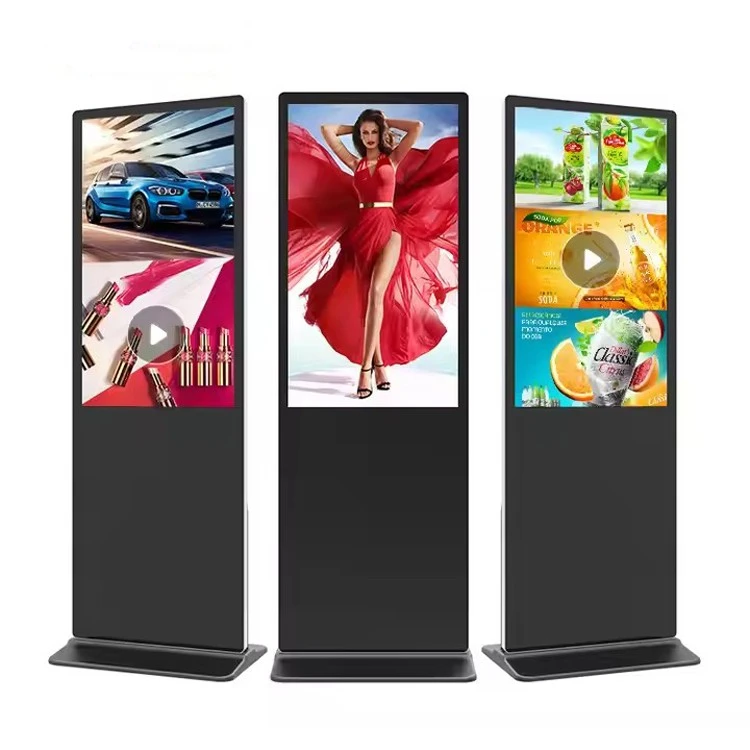
As a digital kiosk vendor, we have developed comprehensive solutions to address all these challenges. Our Floor Standing Digital Kiosk is a prime example. It comes with a high - performance operating system that has in - built multilingual support. The software development team has created a flexible UI design that can easily adapt to different languages and reading directions.
We also offer a content management system (CMS) that simplifies the process of adding and managing multilingual content. With the CMS, clients can upload text, images, videos, and audio files in multiple languages and schedule their display according to their needs. This allows for real - time updates and ensures that the information on the kiosk is always relevant and accurate.
Our 55 Inch Digital Kiosk Display is another product that excels in multilingual support. The large, high - resolution display is perfect for presenting detailed information in multiple languages. The touch - screen functionality makes it easy for users of all ages and language backgrounds to interact with the kiosk.
Benefits of Multilingual Kiosks
The advantages of providing multilingual support in digital kiosks are manifold. Firstly, it significantly expands the reach of the kiosk. By catering to a wider audience, businesses can attract more customers and increase their revenue. For example, a hotel kiosk that offers check - in and information services in multiple languages can provide a better experience for international guests, leading to higher customer satisfaction and repeat business.
Secondly, multilingual kiosks enhance inclusivity. They ensure that everyone, regardless of their language proficiency, can access the information and services provided by the kiosk. This is particularly important in public spaces such as hospitals, libraries, and government offices, where equal access to information is a fundamental right.
Finally, multilingual kiosks can improve brand image. A business that invests in providing multilingual support demonstrates its commitment to serving a diverse customer base. This can enhance the brand's reputation and make it more appealing to international consumers.
Challenges and Limitations
Despite the many benefits, there are also some challenges and limitations in providing multilingual support in digital kiosks. One of the main challenges is the cost of content creation. Translating and localizing content into multiple languages can be expensive, especially for large - scale projects. Additionally, maintaining the accuracy of the translated content requires continuous monitoring and updates.

Another limitation is the potential for technical glitches. Different languages may have unique characters and symbols that can cause compatibility issues with the kiosk's software. These issues need to be carefully tested and resolved to ensure a smooth user experience.
Future Trends
Looking ahead, the future of multilingual digital kiosks looks promising. With the rapid development of artificial intelligence and machine learning, real - time translation capabilities are becoming more accurate and accessible. This means that kiosks may soon be able to provide on - the - fly translation of user - input text or speech, further breaking down language barriers.
The integration of voice - activated technology is also likely to become more prevalent. Users will be able to interact with the kiosk using their native language, making the experience even more intuitive and user - friendly.
Conclusion
In conclusion, digital kiosks can indeed provide effective multilingual support. With the right combination of software, hardware, and content management solutions, they can serve as powerful tools for communicating with diverse audiences. As a digital kiosk vendor, we are committed to staying at the forefront of this technology and providing our clients with the best - in - class multilingual kiosk solutions.
If you are interested in purchasing digital kiosks with multilingual support for your business or organization, we invite you to contact us for a detailed consultation. Our team of experts will work with you to understand your specific needs and develop a customized solution that meets your requirements. Let's take advantage of the power of multilingual digital kiosks to enhance your customer experience and drive business growth.
References
- Internationalization and Localization for Mobile Applications. O'Reilly Media.
- Technology Trends in Digital Signage and Kiosk Solutions. Forrester Research.