


Industrial displays play multiple roles in battery precision testing, including data visualization center, operation control interface, and safety monitoring terminal. Their high-precision display, real-time interaction, environmental adaptability, and intelligent integration capabilities provide critical support for precision testing of the entire battery production process. The following is a detailed analysis of specific application scenarios and technological advantages:
1, Core application scenarios
Real time monitoring of production process
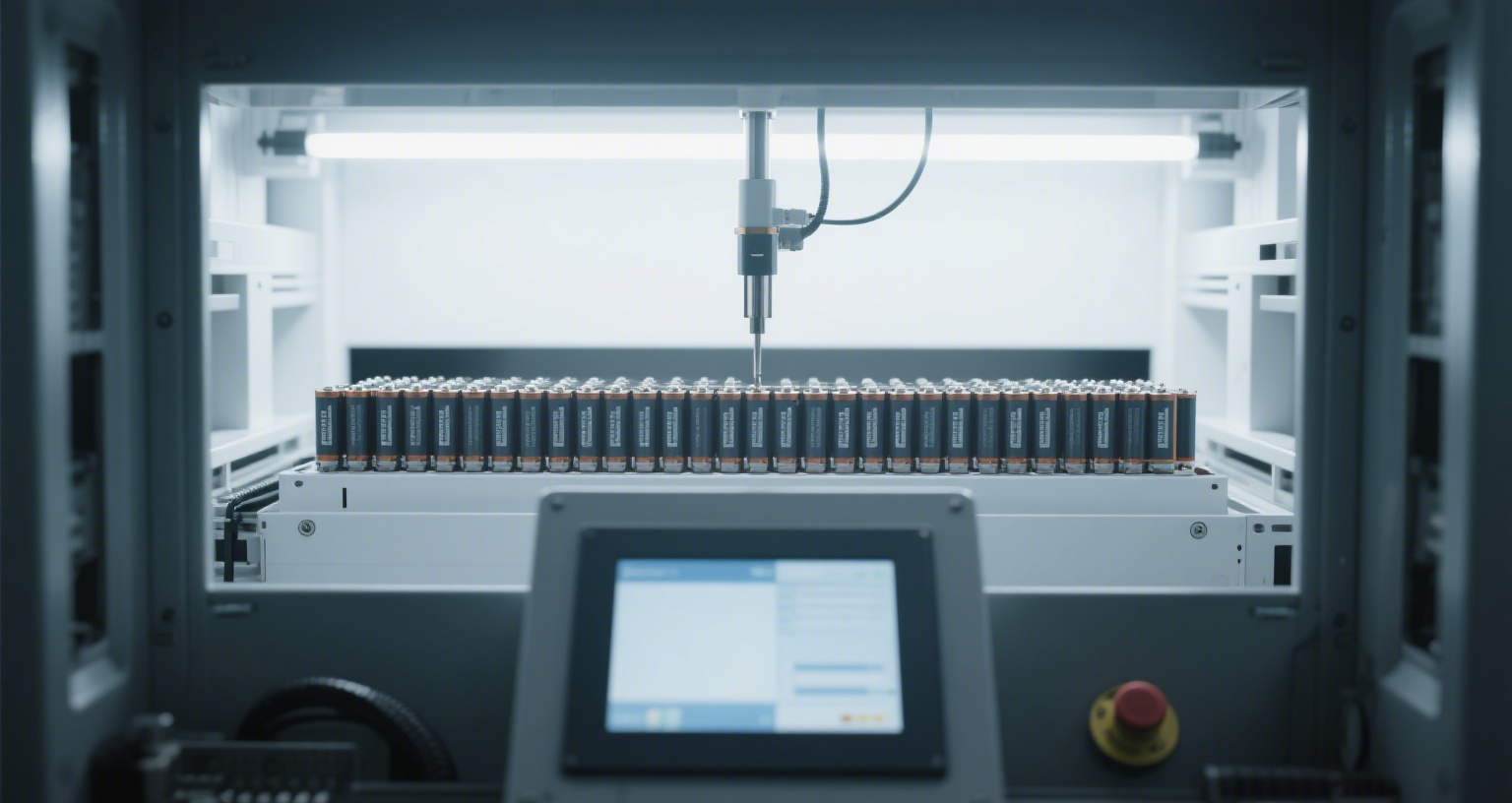
Parameter visualization: Industrial displays display key parameters in battery production in real-time through high-resolution screens (such as 1080P and above), including voltage, current, temperature, internal resistance, remaining capacity, etc. For example, in the battery formation process, the display can dynamically display the charge and discharge curves, helping operators monitor changes in battery status and adjust process parameters in a timely manner.
Fault warning: Combined with sensor data, the display can trigger sound and light alarms or pop-up prompts. For example, when the battery temperature exceeds the safety threshold, the abnormal position and parameters will be immediately displayed to guide quick shutdown processing.
Defect detection and quality control
Machine vision integration: Industrial displays are linked with industrial cameras and light source systems to form machine vision inspection stations. For example, in the coating process of battery electrodes, the display can magnify and display micro features such as coating thickness and uniformity, assisting in the detection of defects such as burrs and cracks, with an accuracy rate of over 99.5%.
Data traceability: The monitor supports historical data query and export functions, and can replay detection images and parameter records, providing a basis for quality traceability. For example, in the battery packaging process, if packaging defects are found, the problem batch and specific workstation can be quickly located through the display.
Security testing and compliance verification
Overcharge/Overdischarge Test: In battery safety testing, industrial displays display real-time voltage and current changes during the testing process, and record key data points. For example, in overcharge testing, the display can mark the time point when the battery voltage reaches the critical value to assist in evaluating the battery's safety performance.
Compliance report generation: The monitor can integrate testing software to automatically generate test reports that comply with international standards (such as IEC 62660), including test conditions, parameter curves, and conclusions, simplifying the compliance verification process.
2, Technological advantages and industry adaptability
High precision display and interaction
Resolution and color reproduction: Industrial displays use high-resolution panels (such as 1920 × 1080) and wide color gamut technology to ensure clear presentation of battery surface defects (such as scratches and pits). For example, in cell thickness testing, the monitor can accurately display the thickness deviation value to assist in determining whether it meets the process requirements.
Multi touch and operational convenience: Supports capacitive or resistive multi touch, allowing operators to quickly adjust detection parameters or view detailed images through finger sliding, zooming, and other operations, improving operational efficiency.
Environmental adaptability and stability
Dustproof and Waterproof Design: The fully enclosed structure combined with IP65 or higher protection level effectively resists the invasion of dust, oil, and liquids in the battery production environment, ensuring stable operation of the monitor in clean workshops or humid environments.
Wide temperature operation capability: Supports working temperatures from -10 ℃ to 60 ℃, adapting to the large temperature difference between day and night in battery production workshops, and reducing equipment failures caused by environmental changes.
Intelligent integration and scalability
Interface richness: Provides HDMI/VGA/DVI, RS232/485, USB and other interfaces to connect industrial cameras, sensors, PLCs and other devices, achieving integrated data acquisition and control. For example, in the battery sorting process, the display receives sorting machine data through a serial port and displays sorting results and statistical charts.
Customization capability: The screen size (such as 10.1 inches to 23.8 inches), functional modules (such as card readers and cameras), and operating system can be customized according to battery testing needs to meet the personalized needs of different testing scenarios.