


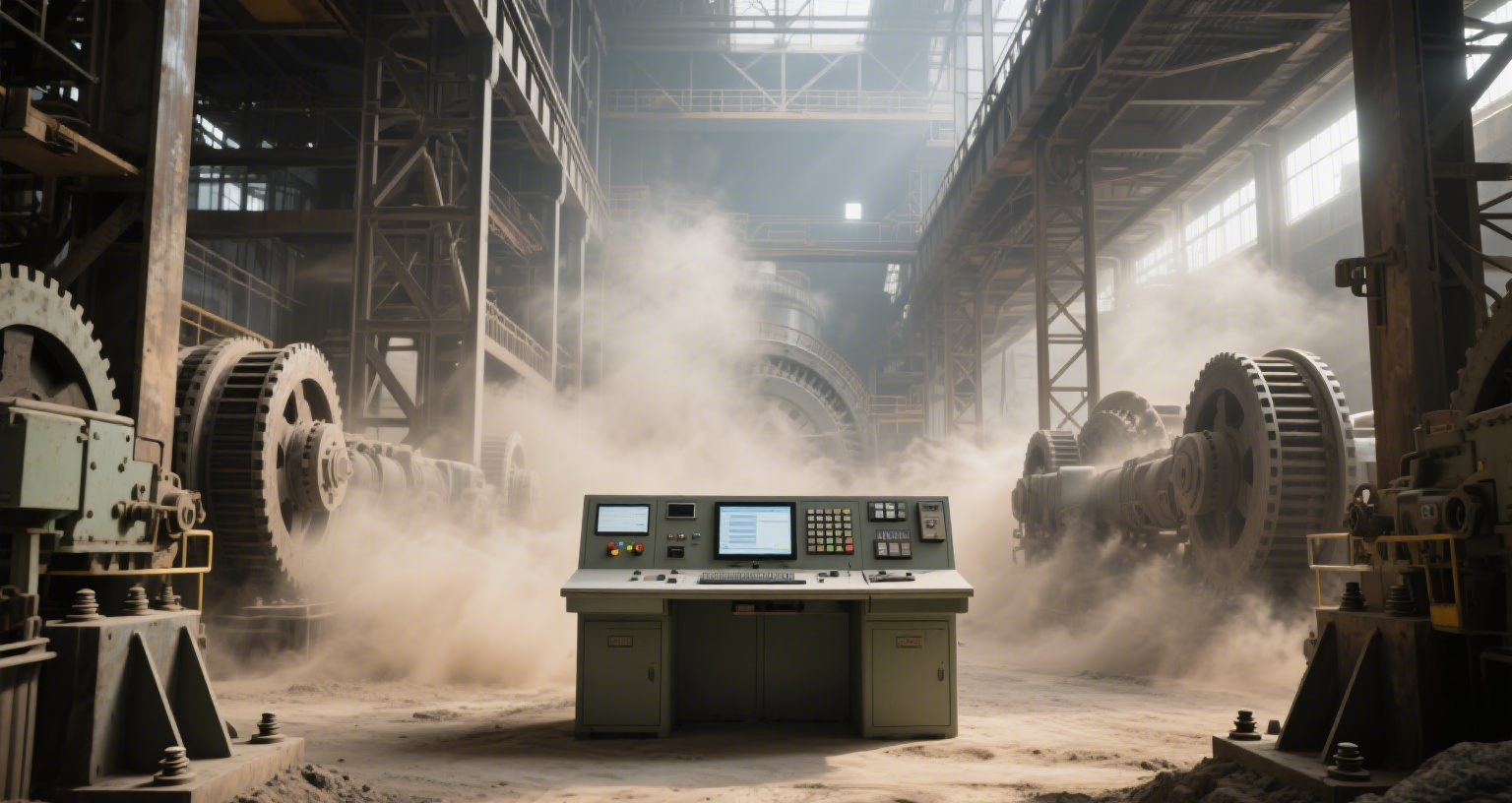
In the dust workshop, the industrial control integrated computer has become a "life-saving tool" to ensure the stable operation of equipment through three core strategies: hardware protection design, optimized anti vibration structure, and enhanced environmental adaptability. The specific implementation methods for vibration and dust prevention are as follows:
1, Dustproof design: fully enclosed structure+multi-stage filtration, blocking dust intrusion
IP65 protection level
The industrial control all-in-one computer adopts a fully enclosed metal shell, combined with a silicone sealing ring, to achieve IP65 (dustproof, waterproof) protection level. For example, in scenarios such as cement plants and flour processing where dust concentration exceeds the standard, IP65 protection can completely prevent dust from entering the interior of the equipment, avoiding circuit short circuits or blurry displays.
Case: After a cement plant introduced IP65 industrial control integrated computers, the equipment lifespan was extended from 2 years to 5 years, and maintenance costs were reduced by 60%.
Positive pressure dust prevention system
Maintain a slight positive pressure inside the chassis, block dust through air intake filtering devices (such as HEPA filters), and use exhaust ports to dissipate internal heat. When the dust concentration sensor detects an excessive level, the system automatically increases the pressure to enhance the dust prevention effect.
Data: Positive pressure system can reduce dust intrusion by 90%, suitable for environments with strong dust mobility such as textile factories and wood processing.
Fanless cooling design
By using large-area fin shaped aluminum fins or heat pipe technology, heat is transferred through natural convection or thermal conductive silicone grease, completely eliminating the risk of dust inhalation caused by fans. For example, in the high-temperature dust environment of a metallurgical plant, a fanless design can ensure stable operation of the equipment at a high temperature of 70 ℃.
2, Anti vibration design: structural reinforcement+energy dissipation to resist high-frequency vibrations
Seismic fixed structure
Ear bolt fixation: The bottom of the equipment extends the ear and is fastened to the cabinet or equipment base with bolts to prevent displacement or tilting caused by vibration. For example, the industrial control integrated computer used next to the stamping machine has an ear hanging design that can withstand 10G vibration acceleration.
Onboard memory and soldering interface: The memory chip is directly soldered onto the motherboard, and the SSD is fixed with mSATA interface or shock-absorbing tray to avoid poor contact caused by vibration in traditional slots. Data shows that onboard memory design can reduce vibration failure rates by 80%.
Shock absorbers and damping materials
Spring shock absorber: The cabinet base is equipped with a spring shock absorber to absorb low-frequency vibration energy, suitable for industrial control integrated computers next to vibration tables, compressors, and other equipment.
Viscoelastic damping material: Covering the interior of the chassis with a damping coating to reduce high-frequency vibration transmission through energy dissipation. For example, in automotive welding production lines, damping materials can reduce equipment vibration amplitude by 50%.
Modular anti vibration design
The expansion card uses M12 aviation connectors instead of regular USB/Ethernet ports to enhance the interface's tensile strength; The internal cables are fixed by shock-absorbing brackets to prevent breakage or loosening caused by vibration.
3, Enhanced environmental adaptability: wide temperature range+anti-corrosion to cope with extreme working conditions
Wide temperature working range
Select industrial grade low-power processors (such as Windows or ARM architecture) and wide temperature power modules, supporting operating temperatures from -20 ℃ to 70 ℃.
Three proof coating protection
The motherboard and slots are covered with anti moisture, anti salt spray, and anti mold paint to prevent corrosive substances in dust from damaging the circuit. Data shows that the three proof coating can extend the lifespan of equipment by three times in corrosive environments such as chemical workshops.
4, Intelligent operation and maintenance: Predictive maintenance reduces downtime risk
Real time monitoring by sensors
Integrate temperature sensors, vibration sensors, and dust concentration sensors to monitor equipment status in real-time. When the temperature exceeds 70 ℃ or there is abnormal vibration, the system automatically operates at a reduced frequency and triggers an alarm.
Cloud based data analysis
Upload monitoring data to the cloud through the MQTT protocol and use machine learning models to predict the probability of failure. For example, a certain electronics factory reduced the unexpected downtime of industrial control all-in-one computers by 75% through predictive maintenance.