


In modern industrial automation systems, custom touch screen monitor solutions based on OEM & ODM manufacturing have become a critical foundation for digital transformation.
Unlike consumer displays, industrial systems must operate reliably under harsh conditions such as extreme temperatures, dust, vibration, and 24/7 continuous workloads. This level of demand requires true engineering capability rather than standard product supply.
Hengstar plays a key role in this space as a full-stack industrial engineering manufacturer, providing customized hardware design, embedded system integration, and scalable mass production for global OEM brands, distributors, and industrial system integrators.
1. Industry Background:
Why Industrial Touch Displays Matter
Industrial touch screen monitors have evolved from simple display terminals into core human-machine interface (HMI) control systems.
In manufacturing, energy, transportation, and medical industries, these systems are responsible for real-time monitoring, control operations, and data interaction between machines and operators.
The demand is driven by three major trends: increasing industrial automation, rapid digital transformation of production systems, and global standardization of industrial control interfaces.
Hengstar supports these industries by delivering application-specific HMI solutions designed for long-term industrial reliability.
2. Core Problem Solved by OEM & ODM Manufacturing
The main challenge in industrial display selection is not choosing a product, but ensuring environmental compatibility and system reliability.
Common issues include instability in extreme temperatures, poor readability under strong sunlight, inability to operate with gloves, and performance degradation during continuous operation.
These issues occur because commercial displays are not engineered for industrial environments.
OEM and ODM manufacturing solves this problem by shifting product development from selection-based thinking to environment-driven engineering design.
At this stage, Hengstar converts environmental requirements into structured engineering specifications, ensuring every solution is designed for real operational conditions.
3. OEM VS ODM Strategic Framework
OEM & ODM represent two different industrial development models.
OEM is suitable for companies with existing product designs. The manufacturer focuses on production execution and quality consistency.
ODM is suitable for clients requiring full product development support. The manufacturer is responsible for design, system architecture, and engineering integration.
In most industrial projects, ODM can reduce development time by 40%–60%, significantly accelerating time-to-market.
3.1 OEM VS ODM Decision Matrix
In industrial display projects, OEM and ODM directly impact cost structure, engineering depth, and development cycle.
OEM relies on existing product designs and is typically used for mature product lines.
ODM provides full engineering services, including hardware design, system integration, and customization.
OEM VS ODM Comparison Table
|
Decision Factor |
OEM Model |
ODM Model |
|
Product Design |
Provided by client |
Developed by manufacturer |
|
Engineering Role |
Manufacturing execution |
Full system engineering |
|
Time to Market |
Medium |
Faster (–40% to –60%) |
|
Customization Level |
Limited |
High |
|
Innovation Level |
Low–Medium |
High |
|
Risk Level |
Lower |
Medium |
|
Best For |
Mature brands |
System integrators / new projects |
4. OEM/ODM Full Manufacturing Process (Engineering Lifecycle)
Industrial touch screen monitor development is a complete engineering system rather than a simple manufacturing process.
Hengstar implements a structured seven-stage engineering lifecycle to ensure reliability and scalability.
4.1 Requirement Analysis
The project begins with application and environment analysis instead of product selection.
Engineering teams define operating environments such as factories, outdoor systems, medical devices, or transportation terminals.
Key conditions such as temperature range, humidity, dust exposure, and continuous 24/7 operation are carefully evaluated.
User interaction requirements such as glove operation, multi-touch support, and anti-mistouch design are also defined.
The final output is an Engineering Requirement Specification (ERS).
At this stage, Hengstar ensures that all industrial requirements are accurately translated into engineering-level system specifications.
4.2 Industrial Design & Mechanical Engineering
This stage converts engineering requirements into physical product structure.
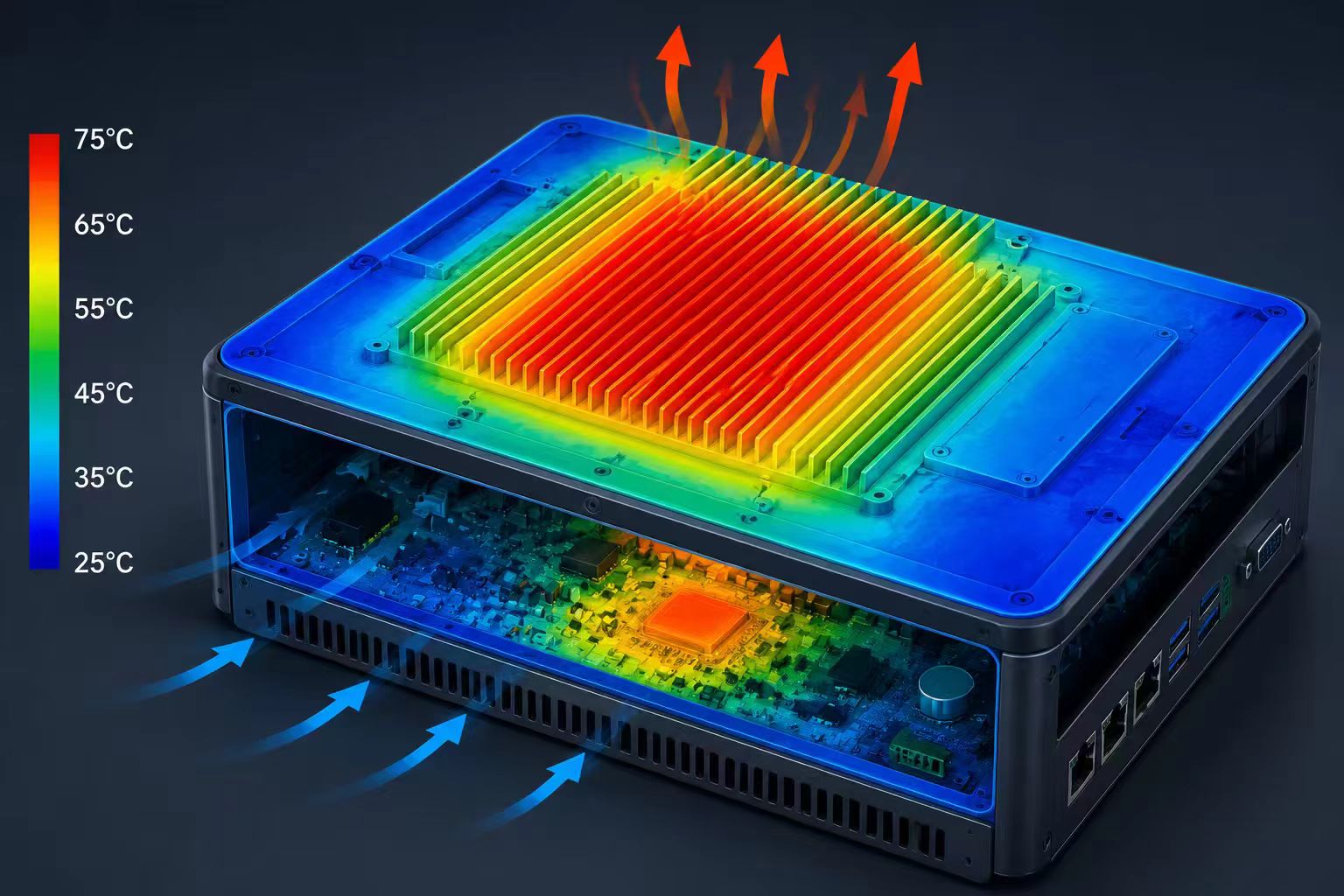
It includes enclosure design, mounting structure, protection design, and thermal management systems.
Industrial-grade aluminum alloy structures are commonly used to ensure heat dissipation and mechanical strength.
For high-protection environments, sealed front panel designs are applied to achieve IP-rated durability.
Thermal simulation is used to validate long-term operational stability.
Hengstar integrates structural engineering with industrial reliability design to ensure long lifecycle performance in demanding environments.
4.3 Hardware Architecture Design
This stage defines the system's performance ceiling.
Display configurations include panel type, resolution, and brightness levels ranging from 300 to 3000 nits.
Touch technologies include PCAP capacitive touch for precision control, resistive touch for glove operation, and infrared touch for large-format applications.
System platforms include ARM-based low-power solutions and Intel-based high-performance architectures, supporting Android, Linux, and Windows systems.
Interface options include HDMI, VGA, DP, USB, and industrial expansion ports.
4.4 Prototype Development & Validation
Prototypes are used to validate engineering feasibility rather than product appearance.
Testing includes touch accuracy, display performance, thermal stability, interface compatibility, and long-term reliability under continuous operation.
If issues are detected, the design is refined before moving to the next stage.
Hengstar uses this phase to ensure early validation of industrial-grade performance requirements.
4.5 Engineering Validation (EVT / DVT)
Industrial products must pass multiple validation stages.
EVT focuses on basic functional verification.
DVT focuses on structural and system stability validation.
Reliability testing includes high/low temperature cycling, burn-in testing, EMC testing, vibration testing, and IP protection validation.
4.6 Pilot Production
Small batch production (10–100 units) is used to validate manufacturing consistency and process stability.
This stage identifies potential risks before full-scale production.
Hengstar uses pilot runs to ensure stable scaling from engineering to mass production.
4.7 Mass Production
Mass production follows standardized and automated processes.
These include SMT assembly, mechanical integration, optical bonding, firmware flashing, and system calibration.
Automation ensures consistency and reduces variability across production batches.
4.8 Final Quality Control
Each unit undergoes strict final inspection before shipment.
Testing includes long-duration operation checks, functional verification, electrical safety validation, and structural integrity inspection.
5. Key Engineering Factors for Industrial Displays
Industrial display performance depends on multiple engineering parameters.
Brightness determines visibility in different environments.
Touch technology affects operational accuracy and user experience.
IP protection level ensures resistance to dust and water.
Wide temperature design guarantees stability in extreme industrial conditions.
6. Industry Trends (2026–2030)
Industrial display systems are evolving into intelligent components within automation ecosystems.
AI integration enables predictive maintenance and real-time analytics.
Fanless architecture improves reliability in continuous operation environments.
Modular ODM design enhances customization efficiency.
Demand for high-brightness outdoor displays continues to grow in smart infrastructure and transportation sectors.
7. Case Study: Industrial Automation Upgrade (Europe)
A European industrial client required a 15.6-inch industrial touch screen for continuous operation in a high-dust environment.
Requirements included glove-based operation, multilingual interface, and high system stability.
The final solution adopted a fanless architecture, aluminum housing, PCAP touch system, and IP65 protection design.
Hengstar delivered a solution that significantly improved operational efficiency and system reliability after deployment.
8. Manufacturing Strength & Engineering Capability (Trust Module)
Industrial success depends not only on product specifications but also on engineering capability and manufacturing reliability.
Hengstar operates as a full industrial engineering platform, not just a hardware supplier.
Capabilities include mechanical engineering design, embedded system development, thermal management, and optical bonding technology.
The company also maintains stable mass production systems with strict supply chain control and batch consistency management.
Certifications include CE, FCC, RoHS, along with environmental reliability testing such as temperature cycling, vibration, and burn-in testing.
This ensures customers receive not only a product, but a complete industrial engineering solution.
Conversion Path
Users typically follow a structured decision path:
Search → Comparison → Technical Evaluation → Project Inquiry
This article is designed to support the full B2B decision-making journey.
Engineering Consultation & OEM/ODM Support
If you are developing a custom industrial touch screen monitor or HMI system, Hengstar provides full-cycle engineering support.
Services include:
Custom hardware and structural design
Industrial-grade reliability engineering
Rapid prototyping and validation
Global certification support (CE / FCC / RoHS)
Scalable OEM & ODM mass production capability
24-hour technical evaluation available
Custom quotation and engineering consultation support
FAQ
1. What is a custom touch screen monitor?
A fully customized industrial display system designed for specific environments.
2. What is the difference between OEM and ODM?
OEM is production based on existing design, while ODM includes full engineering design and manufacturing.
3. How long does development take?
Typically 4–10 weeks depending on complexity.
4. Can it be used outdoors?
Yes, with high brightness and protective design.
5. What industries use industrial touch displays?
Manufacturing, energy, transportation, medical, and automation industries.
6. What is PCAP touch technology?
A capacitive multi-touch technology widely used in industrial systems.
7. Why is OEM/ODM important?
Because it enables environment-driven engineering instead of standard product selection.