


Introduction
In transportation environments such as airports, metro stations, and railway terminals, visibility of display information is a critical operational factor.
High ambient light, strong sunlight, and reflective glass structures often reduce the readability of standard LCD screens. As a result, passengers may struggle to see schedules, directions, or emergency messages clearly.
This is not only a user experience issue but also a system efficiency and safety concern.
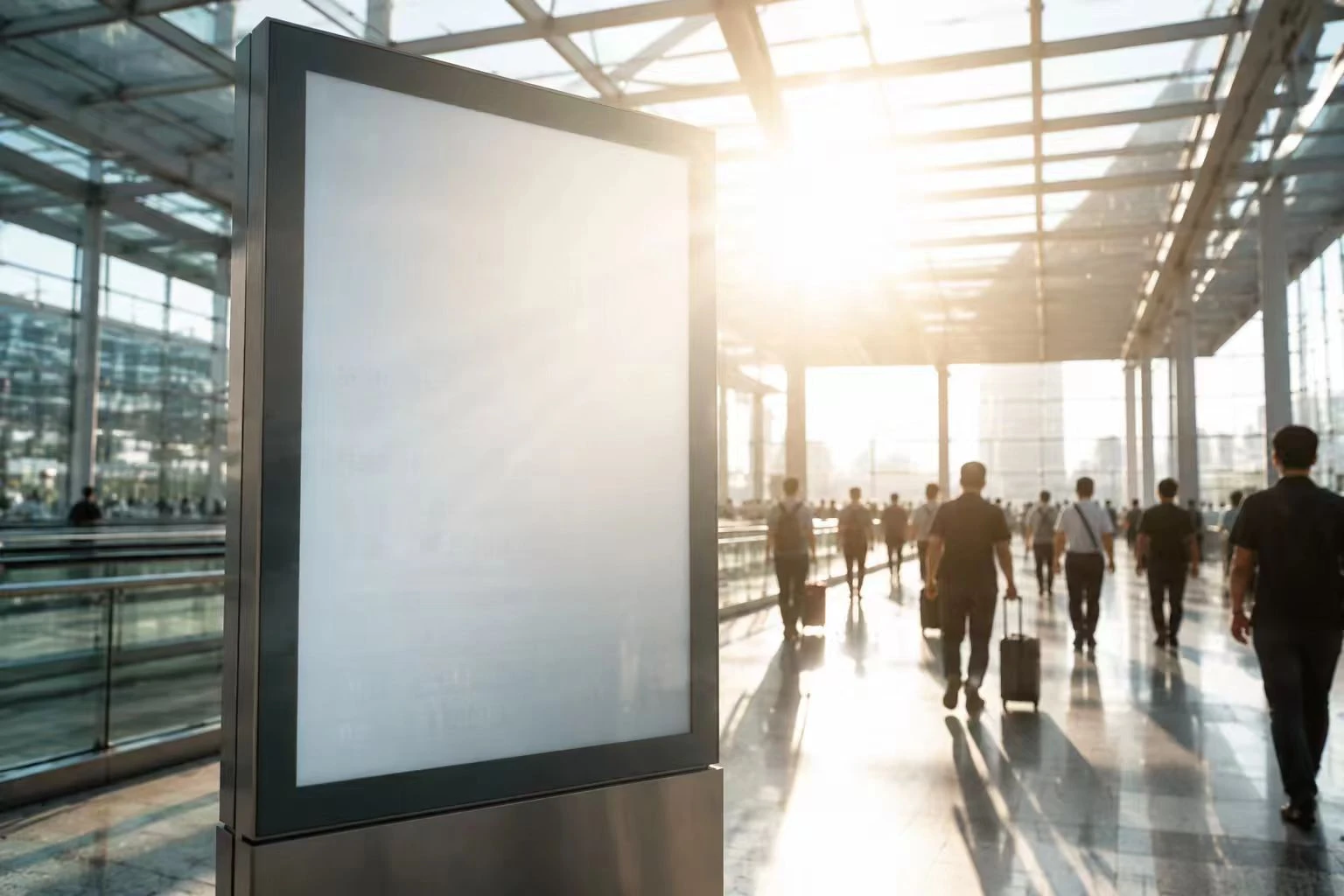
Visibility Challenges in Transportation Environments
Transportation systems operate under constantly changing lighting conditions.
Outdoor platforms face direct sunlight, while indoor areas rely on artificial lighting. In addition, glass-heavy architecture creates unpredictable reflections that further reduce screen clarity.
Standard displays often fail to maintain stable readability under these conditions.
- In real deployments, glare and reflection intensity can vary significantly depending on time of day and station design.
- This variability makes consistent visual performance difficult for non-industrial display systems.
Why Standard Displays Fail in Real-World Conditions
Conventional LCD displays are typically designed for controlled indoor environments.
When exposed to high ambient brightness, their contrast ratio drops significantly. This leads to washed-out images and poor readability, especially at wider viewing angles.
In transportation hubs, this limitation becomes more obvious due to continuous environmental changes.
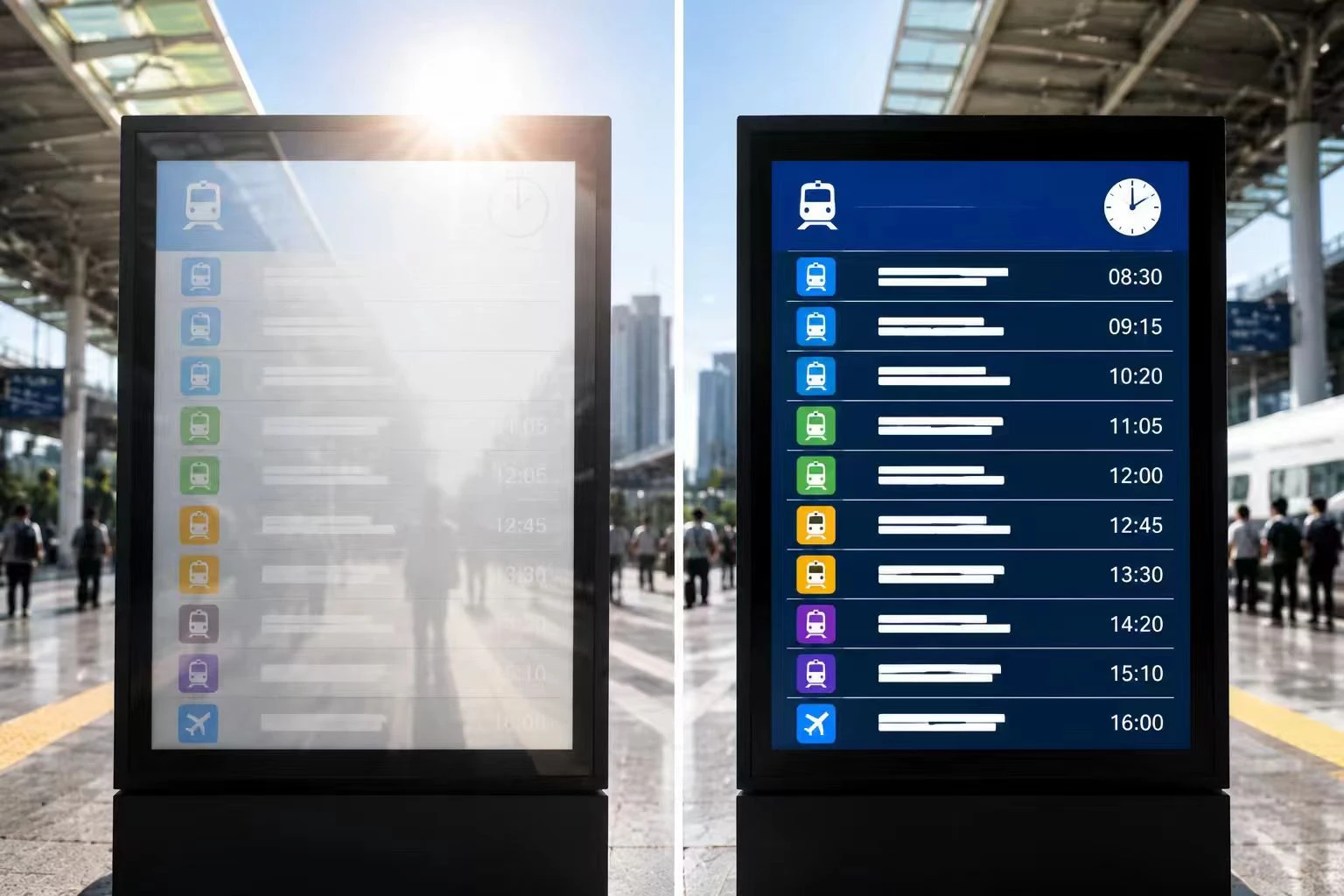
High Brightness Display as a Core Solution
A high brightness display is designed specifically to solve visibility issues in high ambient light environments.
By increasing backlight intensity, these displays can reach 1500 to 3000 nits or higher, enabling sunlight readable performance even in direct outdoor exposure.
However, brightness alone is not enough. A complete industrial display solution must integrate optical and structural engineering.
Optical Bonding and Anti-Glare Technology
Optical bonding removes the air gap between display layers, reducing internal reflection and improving contrast stability.
Anti-glare surface treatment further minimizes external light reflection, ensuring consistent readability from different viewing angles.
Thermal and Industrial Design Considerations
High brightness operation generates additional heat, requiring efficient thermal management to maintain long-term stability.
Industrial-grade structural design also ensures resistance to vibration, dust, and temperature variation, which are common in transportation environments.
This is particularly important for 24/7 operation in unattended infrastructure systems.
Impact on Passenger Flow and Operational Efficiency
Clear display visibility directly improves passenger decision-making speed.
This leads to smoother passenger flow, reduced congestion, and lower dependence on on-site staff assistance.
In high-density environments, even small improvements in readability can significantly improve overall system throughput.
Role in Safety-Critical Communication
Transportation display systems are also used for safety communication, including emergency instructions and system alerts.
In these scenarios, readability becomes a critical safety factor. Delayed or unclear information can increase operational risk.
Application Scenarios of High Brightness Displays
High brightness displays are widely used in passenger information systems (PIS), self-service kiosks, embedded terminals, and vehicle-mounted displays.
They are especially critical in outdoor or semi-outdoor environments where sunlight exposure is unavoidable.
Conclusion
Transportation systems require one core capability: information must remain readable under all lighting conditions.
High brightness displays, combined with optical bonding, thermal design, and rugged engineering, form a complete solution for this challenge.
This makes them a fundamental component of modern transportation infrastructure.
Hengstar High Brightness Display Solutions
The reason why Hengstar monitors can reliably support the 7×24-hour operational applications of transportation, energy and smart infrastructure is that Hengstar not only provides innovative low-power high-brightness LED backlight display technology solutions, but also adds an anti-UV coating on the cover plate of the liquid crystal display screen!
Our product range includes high brightness LCD modules, industrial monitors, embedded panel PCs, and vehicle display systems.
We support full customization including brightness tuning, optical bonding integration, and mechanical design optimization for different environmental requirements.
Contact us for OEM High Brightness Display Solutions.
References
International Association of Public Transport (UITP) – Smart Mobility & Transport Systems
https://www.uitp.org
International Organization for Standardization (ISO) – Ergonomics of visual display systems
https://www.iso.org
IEC 61747 – Liquid crystal display device standards
https://www.iec.ch
Smart Cities Council – Intelligent Transportation Infrastructure Insights
https://smartcitiescouncil.com
National Institute of Standards and Technology (NIST) – Human Factors & Display Research
https://www.nist.gov
FAQ
What is a high brightness display used for in transportation systems?
It ensures clear visibility of information under strong ambient light and outdoor environments.
Why are high brightness displays necessary in transportation hubs?
Because standard displays become difficult to read under sunlight and reflective conditions.
What brightness level is typically required outdoors?
Most applications require 1500–3000 nits depending on environment and installation angle.
What is optical bonding in display technology?
It is a process that removes air gaps between layers to reduce reflection and improve contrast.
Can high brightness displays operate 24/7?
Yes, industrial-grade designs are built for continuous operation in demanding environments.
Where are these displays commonly used?
Airports, metro systems, railway stations, bus terminals, and smart city infrastructure.