


Industrial touch displays are intelligent interfaces that connect humans and machines through touch based industrial displays. It is an intelligent operation display terminal that replaces traditional control buttons and indicator lights. It can be used to set parameters, display data, monitor device status, and depict automation control processes in the form of curves/animations. More convenient, fast, and expressive, and can be simplified into a PLC control program. The powerful touch screen creates a friendly human-machine interface. As a special computer peripheral, touch screen is currently the simplest, most convenient, and natural way of human-computer interaction. It gives multimedia a brand new look and is a highly attractive new multimedia interactive device.
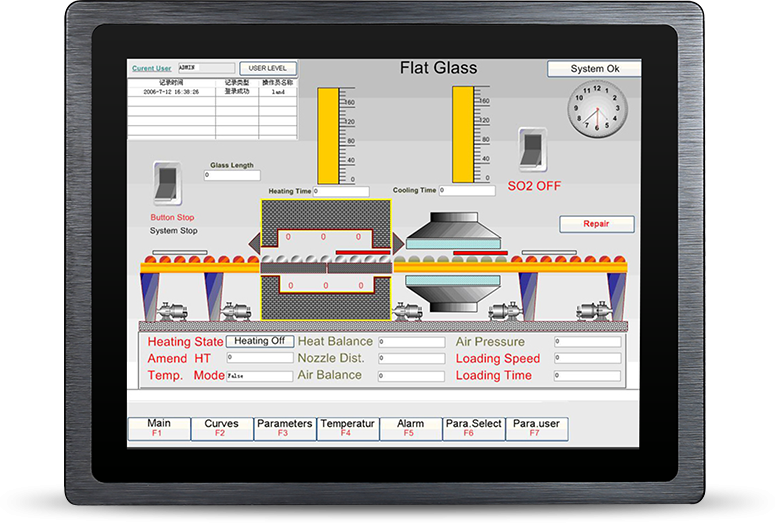
1, Principles of industrial touch displays
A touch screen system generally consists of two parts: a touch screen controller (card) and a touch detection device. The main function of the touch screen controller (card) is to receive touch information from the touch point detection device, convert it into touch point coordinates, and then send it to the CPU. It can also receive commands from the CPU and execute them. The touch detection device is generally installed at the front end of the display, and its main function is to detect the user's touch position and transmit it to the touch screen control card.
Industrial touch display screens have strong flexibility and can replace or add functional modules according to design requirements. They have strong scalability and can meet complex process control requirements. They can even communicate directly with PLC through network systems, greatly facilitating the processing and transmission of control data and reducing maintenance.
1. Touch display module
The screen body of a resistive touch screen is a multi-layer composite film that matches the surface of the display. It is made of a layer of glass or organic glass as the base layer, coated with a transparent conductive layer on the surface, and covered with an outer surface hardened, smooth and scratch resistant plastic layer. Its inner surface is also coated with a transparent conductive layer, and there are many small (less than one thousandth of an inch) transparent isolation points between the two conductive layers to isolate them.
When a finger touches the screen, the two normally insulated conductive layers make contact at the touch point. One of the conductive layers is connected to a 5V uniform voltage field in the Y-axis direction, causing the voltage of the detection layer to change from zero to non-zero. After this connection state is detected by the controller, A/D conversion is performed, and the obtained voltage value is compared with 5V to obtain the Y-axis coordinate of the touch point. Similarly, the X-axis coordinate can be obtained. This is the most basic principle common to all resistive touch screens.
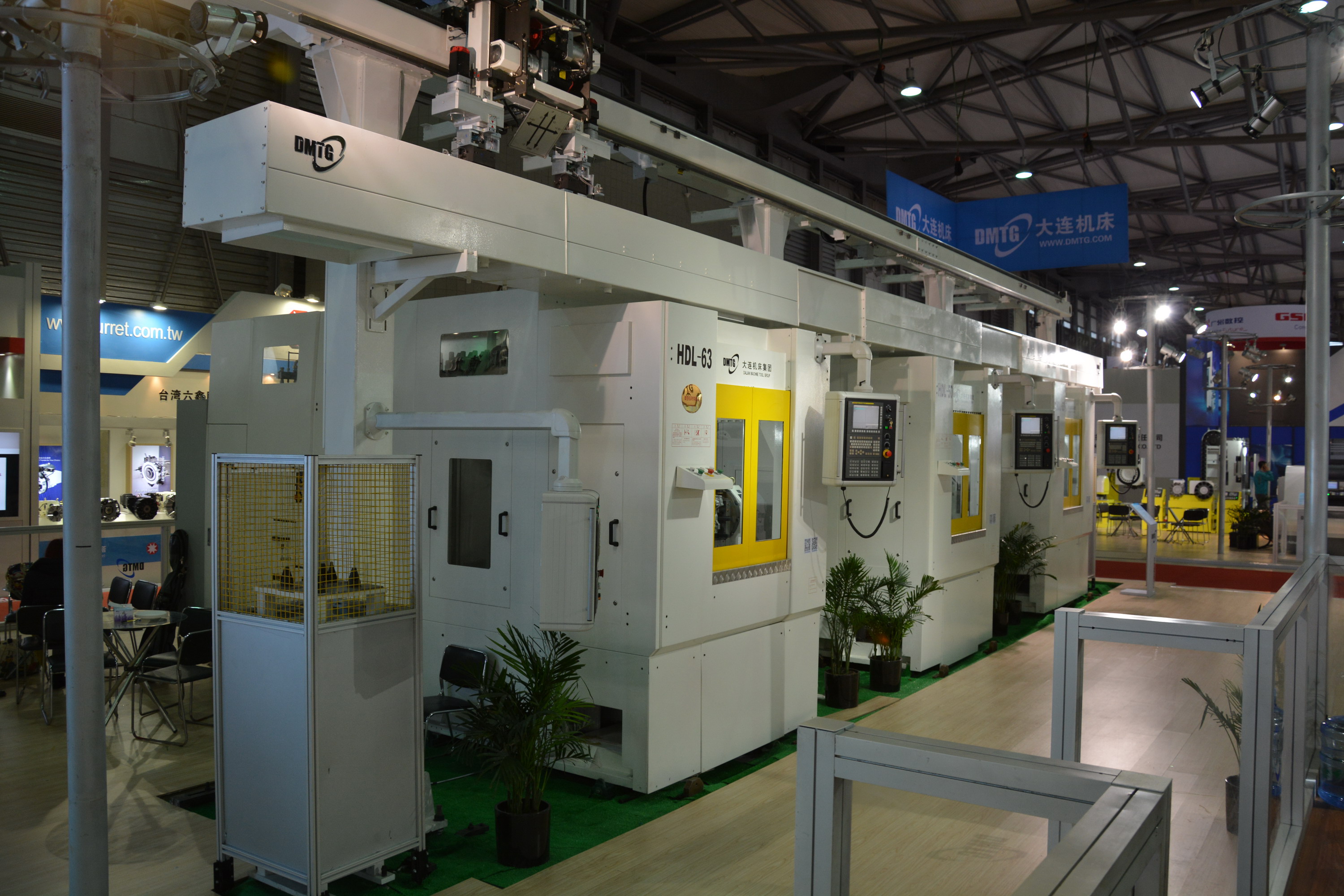
The key to resistive touch screens lies in material technology. Resistive touch screens are divided into four wire, five wire, six wire, and other multi wire resistive touch screens based on the number of lead wires. The resistive touch screen is coated with two layers of OTI transparent oxide metal conductive layers on the strengthened glass surface. The outermost layer of OTI coating serves as the conductive material, and the second layer of OTI is attached with a precise network of+5V to 0V voltage fields in both horizontal and vertical directions. The two layers of OTI are separated by small transparent isolation points. When a finger touches the screen, a contact point appears between the two layers of OTI conductive layers. The computer simultaneously detects the voltage and current, calculates the touch position, and has a response speed of 10-20 ms. The outer conductive layer of the five wire resistive touch screen uses a nickel gold coating material with good ductility. Due to frequent touch, the use of nickel gold material with good ductility in the outer conductive layer is to extend its service life, but the process cost is relatively high.
Although nickel gold conductive layer has good ductility, it can only be used as a transparent conductor and is not suitable as a working surface for resistive touch screens because of its high conductivity. Moreover, the metal is not easy to achieve a very uniform thickness and is not suitable as a voltage distribution layer. It can only be used as a probing layer.
A resistive touch screen is a completely isolated working environment from the outside world, not afraid of dust and water vapor. It can be touched with any object and can be used for writing and drawing, making it suitable for use in industrial control fields and offices. The common disadvantage of resistive touch screens is that the outer layer of the composite film is made of plastic material, which may scratch the entire touch screen and cause it to be scrapped if someone applies too much force or uses a sharp tool to touch it. However, within the limits, scratches will only damage the outer conductive layer. Scratches on the outer conductive layer are not relevant for a five wire resistive touch screen, but fatal for a four wire resistive touch screen.